Read the application module configuration
In a modern Android Gradle setup, inspect both namespace and the final applicationId, including flavor and build-type overrides:
android {
    namespace = "com.example.notes"
    defaultConfig {
        applicationId = "com.example.notes"
    }
    buildTypes {
        debug {
            applicationIdSuffix = ".debug"
        }
    }
}
This example deliberately lets debug and release install under different identities. It is not a migration recipe for an already published app. App-module configuration.
Verify the packaged identity
Inspect the built artifact rather than assuming Gradle's base value wins:
apkanalyzer manifest application-id app-release.apk
A product flavor or suffix can produce a different ID. That difference affects installation, Firebase configuration, API restrictions and which Play app can accept an upload.
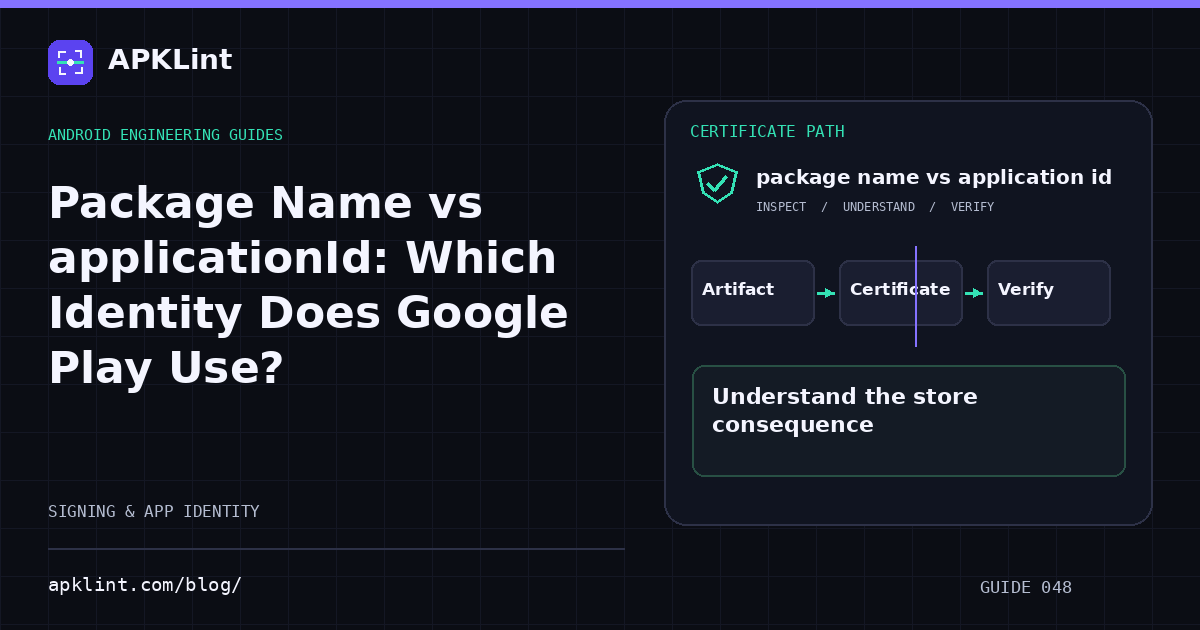
Understand the store consequence
An existing Play app is associated with its package identity. Publishing the same UI under another application ID is not an ordinary update to the existing listing. Review the intended product and migration path before making that change. Play signing and identity.
Version code and signing identity remain separate requirements. Matching the package name is necessary for a normal update, but it does not make an unrelated signer acceptable.
Diagnose common mismatches
| Symptom | First identity check |
|---|---|
| Firebase says no matching client | Final application ID vs registered Android app |
| Debug and release overwrite each other unexpectedly | Missing or unintended suffix |
| Play rejects the upload for another app | Bundle application ID vs selected listing |
| Generated resource references fail | Namespace and imports, not only application ID |
Do not change every package string in the repository blindly. Test manifests, authorities, deep-link configuration and service registrations can each have their own matching rules.
Keep a clear release ledger
Record the application ID, version code, namespace and signing fingerprint for every distributed variant. Android versioning explains how release identifiers complement the stable app identity.
APKLint's checker can reveal packaged metadata. It cannot rename a Play listing's underlying application identity or validate all external services bound to that ID. Resolve identity mismatches at the build and service-registration layers before retrying uploads.
Sources and further reading
- Android Developers: Configure the app module
- Android Developers: Version your app
- Google Play: Use Play App Signing
Reference review: 22 September 2026. Examples illustrate the workflow; check your installed versions, release artifact and account-specific Console requirements before applying them. This guide is not a claim that APKLint executed your project or verified your private account.

Android inspection tools and practical release guides. About APKLint · Report a correction