Compare the actual jobs
| Question | APK | AAB |
|---|---|---|
| Can the normal package installer install this file directly? | Yes, when complete and compatible | No |
| Can it represent a device-specific delivery unit? | Yes, including splits | It describes modules for APK generation |
| Is its size a universal store-download measurement? | No | No |
| Does it need signing in a release workflow? | Yes | Yes, with the relevant publishing key |
An AAB does not make code inherently safer or eliminate the need for release testing. It changes packaging and delivery. Android App Bundles.
Understand the release path
A typical Play workflow builds an AAB, signs it with the upload key and sends it to Play. Play App Signing then signs delivered APKs using the app-signing identity. For some other distribution channels, a signed APK is the required artifact.
That distinction explains why a Firebase or API integration can work with a locally installed build and fail after a store install: the package name may match while the signing certificate differs.
Choose the right file for a diagnostic task
Use an APK when you need to inspect the exact installed code and manifest for a device. Use an AAB when you need to review module organization, publishing configuration or generate test APK sets. If the app uses dynamic delivery, document which modules are installed during a runtime test.
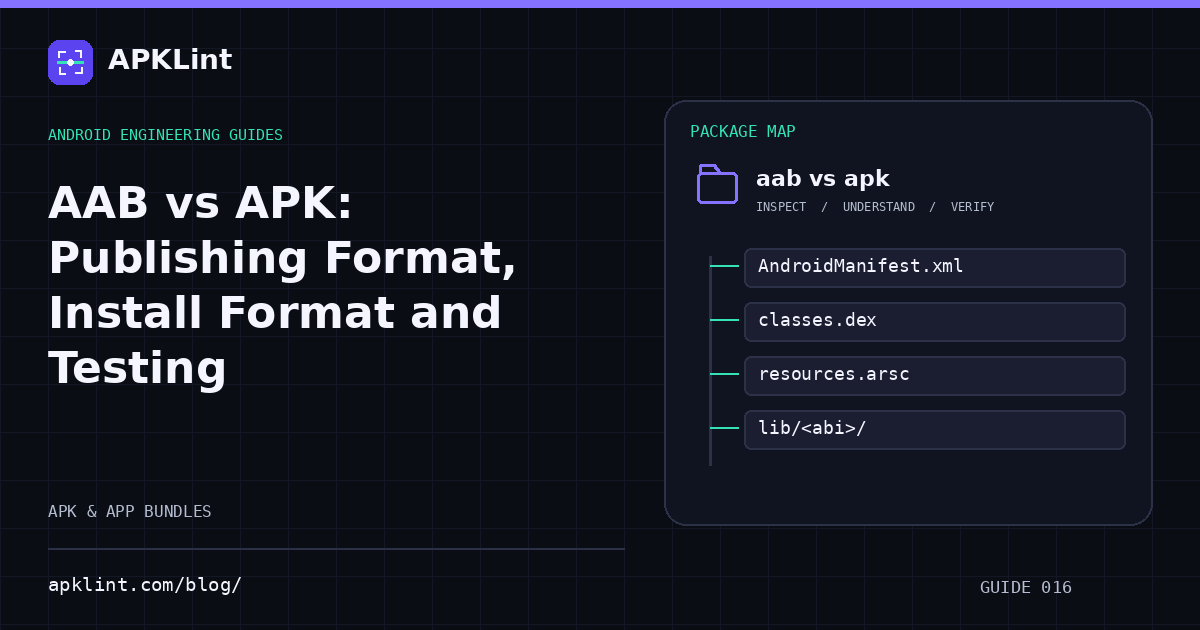
The bundle structure is module-oriented. A generic ZIP listing does not perform the transformations required for an installable APK.
Test both build and delivery behavior
Generate local APKs with bundletool for development checks, then test through the intended Play track when store signing or delivery matters. A universal local APK cannot prove every device-specific path works.
Test upgrades as well as clean installs. Verify version codes, signing continuity, saved data and availability of required feature modules. Treat a clean launch screen as the start of a smoke test, not the whole release test.
Avoid the common conversion mistake
Changing .aab to .apk changes only the name. It does not decode module manifests, create split packages or sign the result. Use a bundle-aware tool and keep generated output separate from the original publishing artifact.
APKLint provides separate APK and AAB analysis pages because the formats answer different questions. Compare reports only after matching the artifact type and the scope of the analysis.
Sources and further reading
- Android Developers: Android App Bundles
- Android Developers: App bundle format
- Android Developers: bundletool
Reference review: 22 September 2026. Examples illustrate the workflow; check your installed versions, release artifact and account-specific Console requirements before applying them. This guide is not a claim that APKLint executed your project or verified your private account.

Android inspection tools and practical release guides. About APKLint · Report a correction