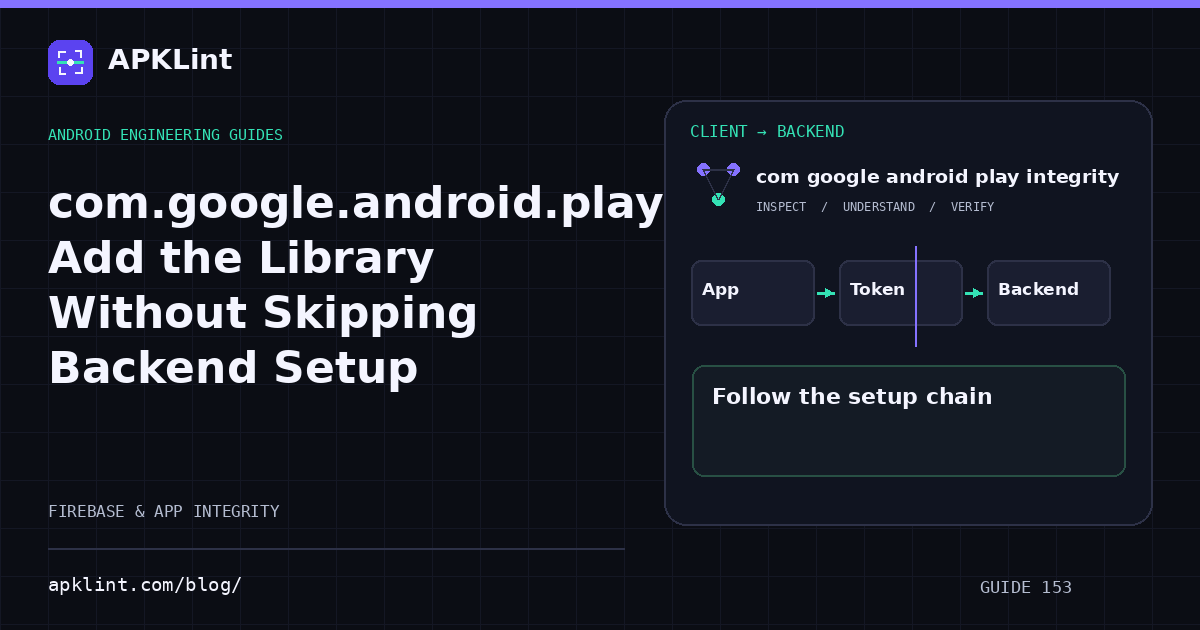
Follow the setup chain
Use the official setup guide for the current dependency and project requirements. Pin the documented version appropriate to your integration rather than using an unbounded dynamic selector.
Check repository configuration and resolve the library through its supported distribution source. A dependency resolution failure is a build problem, not a failed device-integrity verdict.
Separate four identities
| Identity | Why it matters |
|---|---|
| Android package | Identifies the application |
| Signing certificate | Identifies the distributed signer |
| Cloud project number | Associates the service configuration |
| Backend verifier identity | Authorizes server-side verification operations |
Do not substitute a Firebase web API key for a Cloud project number or place backend service-account credentials in the APK.
Prepare the selected request flow
The standard-request documentation describes the provider preparation lifecycle and request API. Perform preparation and error handling according to that lifecycle rather than constructing a new expensive setup operation for every UI frame or tap.
Keep protected action data consistent between client and server so the verdict can be evaluated in the intended context.
Diagnose errors at the correct layer
A Gradle sync error, provider initialization error, token acquisition error and server decoding error are different failures. Record the stage and a redacted error code.
Changing the library version randomly is unlikely to fix a wrong project number or certificate registration.
Validate before enforcement
Build and install the actual release-path artifact, acquire evidence and verify it server-side. APKLint's Gradle Dependency Checker can review the declaration and its package tools can inspect identity metadata, but neither establishes that the Cloud service or backend is correctly configured. Require a complete end-to-end verification test before making the result a condition for important user actions.
Sources and further reading
Reference review: 22 September 2026. Examples illustrate the workflow; check your installed versions, release artifact and account-specific Console requirements before applying them. This guide is not a claim that APKLint executed your project or verified your private account.

Android inspection tools and practical release guides. About APKLint · Report a correction