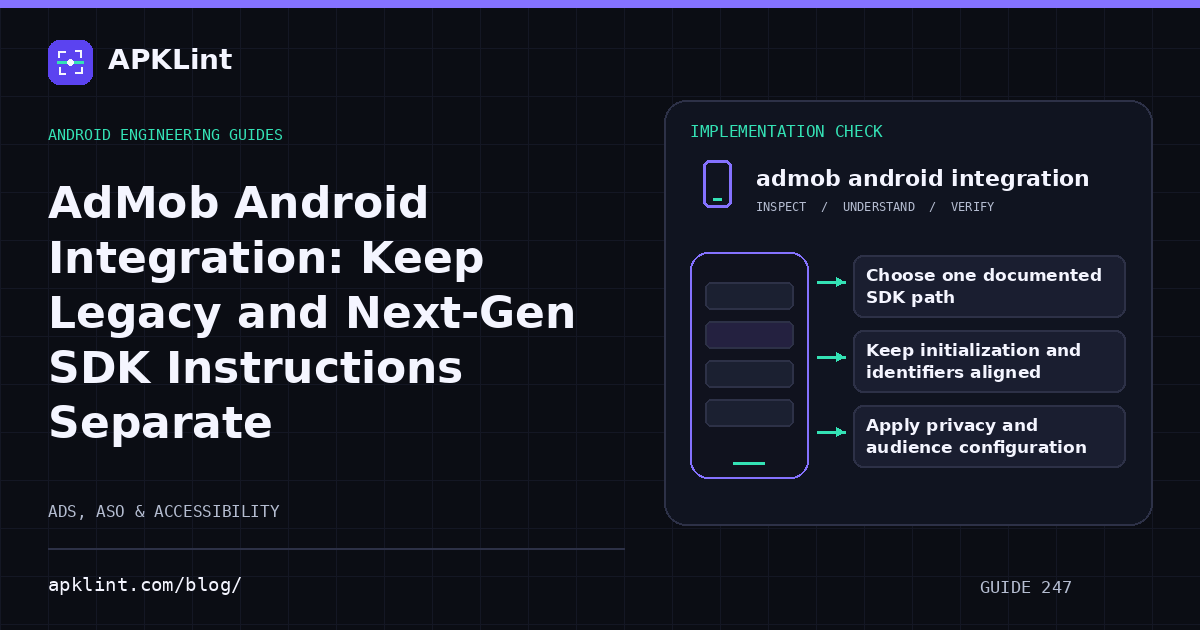
Choose one documented SDK path
As checked on 22 September 2026, the setup pages show these dependency examples:
// Legacy SDK path:
implementation("com.google.android.gms:play-services-ads:25.5.0")

// Next-Gen path — an alternative, not an extra dependency:
implementation("com.google.android.libraries.ads.mobile.sdk:ads-mobile-sdk:1.4.0")
These are dated examples, not instructions to add both. Check migration and mediation support for your required networks before changing families.
Keep initialization and identifiers aligned
The legacy setup uses the com.google.android.gms.ads.APPLICATION_ID manifest metadata. The Next-Gen setup supplies the app ID through InitializationConfig and requires initialization on a background thread before most SDK interactions.
Do not move a legacy ad-unit ID into the Next-Gen app-ID field. App IDs contain a tilde; ad-unit IDs contain a slash.
Follow the selected SDK's lifecycle and callback guidance. For mediation, verify when the relevant adapters are ready rather than assuming all partner initialization has finished after the first method returns.
Apply privacy and audience configuration first
SDKs or partners may preload during initialization. Complete the required consent handling and set applicable audience/request controls before triggering collection or ad loading. A consent form shown after initialization is not automatically equivalent.
Use official demo ad units or configured test devices. Never click production ads to test callbacks.
Diagnose in layers
Check dependency resolution, app ID, initialization, ad format, request error details and adapter state in that order. “No fill” and a missing application ID are not the same class of problem.
APKLint's advertising and SDK tools can help inspect manifest and dependency signals. They do not connect to your AdMob account or prove that inventory will be available.
Use the legacy setup, Next-Gen setup and SDK disclosure reference for the chosen integration. Recheck versions and supported adapters before a later release instead of treating this dated dependency example as permanently current.
Sources and further reading
- Google: Legacy Google Mobile Ads SDK setup
- Google: Mobile Ads SDK data disclosure
- Google Mobile Ads: Next-Gen Android SDK setup
Reference review: 22 September 2026. Examples illustrate the workflow; check your installed versions, release artifact and account-specific Console requirements before applying them. This guide is not a claim that APKLint executed your project or verified your private account.

Android inspection tools and practical release guides. About APKLint · Report a correction