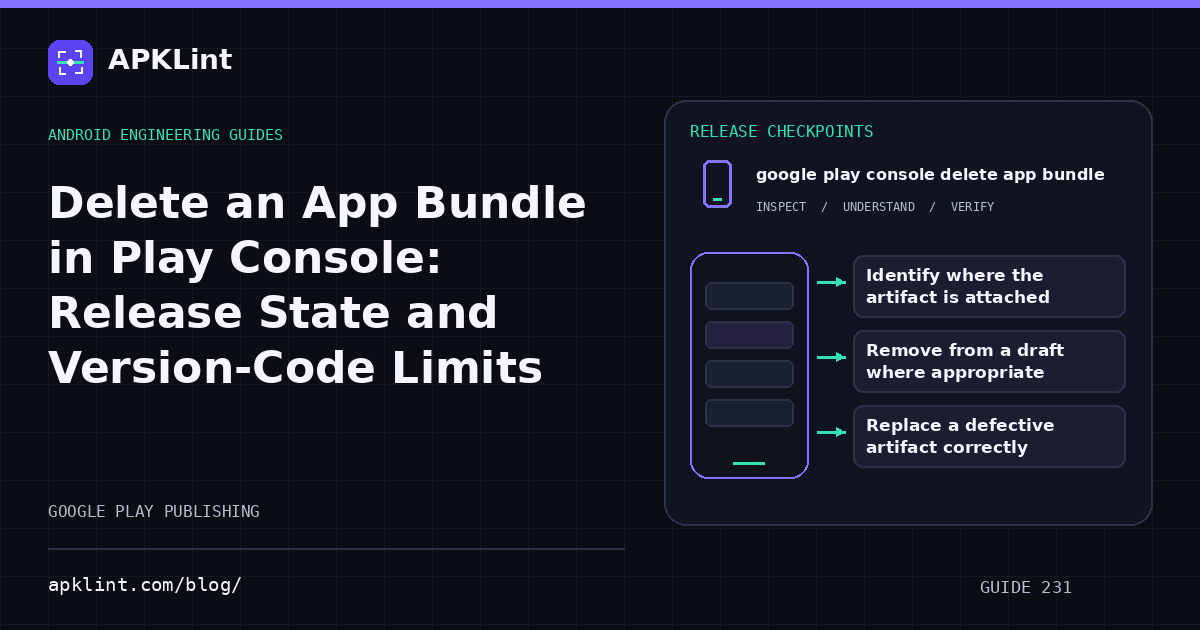
Identify where the artifact is attached
Open the app's release area and locate the specific track and release. In the current workflow, releases are under Test and release, with testing tracks and Production managed separately. The artifact inventory is described as Latest releases and bundles, replacing older “App bundle explorer” wording in current help navigation.
Record the version code, signing identity and track before editing. A similarly named bundle from another build is not interchangeable.
Remove from a draft where appropriate
Google's release guide describes removing an artifact from the Included section with Remove. That changes the release's selection; the uploaded artifact remains available in the broader bundle inventory.
If changes have been submitted or published, use the controls appropriate to that state. Do not assume the draft workflow applies to a live production release. Review Publishing overview for pending changes and their review status.
Replace a defective artifact correctly
Build a corrected release with a new valid version code and the required signing arrangement. Retain the previous artifact for diagnosis. The version name displayed to users can be similar while the internal version code increases.
Bad artifact:   versionCode 120
Corrected build: versionCode 121
This illustrates sequencing, not a prescribed version scheme. Check every active track and existing version-code range before assigning the next value.
Avoid confusing local deletion with Play state
Deleting the .aab file from your computer does not remove it from Console. Removing a release entry does not delete customer accounts. Unpublishing the app does not repair a signed artifact already delivered to users.
APKLint's AAB Analyzer can help identify the bundle you are about to upload. It does not remove cloud artifacts or verify all delivery configurations.
Use the current release instructions, unpublishing guidance and Android versioning reference. When the UI does not offer the expected action, inspect permissions and release state instead of inventing an undocumented deletion endpoint.
Sources and further reading
- Google Play: Prepare and roll out a release
- Google Play: Update or unpublish your app
- Android Developers: Version your app
Reference review: 22 September 2026. Examples illustrate the workflow; check your installed versions, release artifact and account-specific Console requirements before applying them. This guide is not a claim that APKLint executed your project or verified your private account.

Android inspection tools and practical release guides. About APKLint · Report a correction