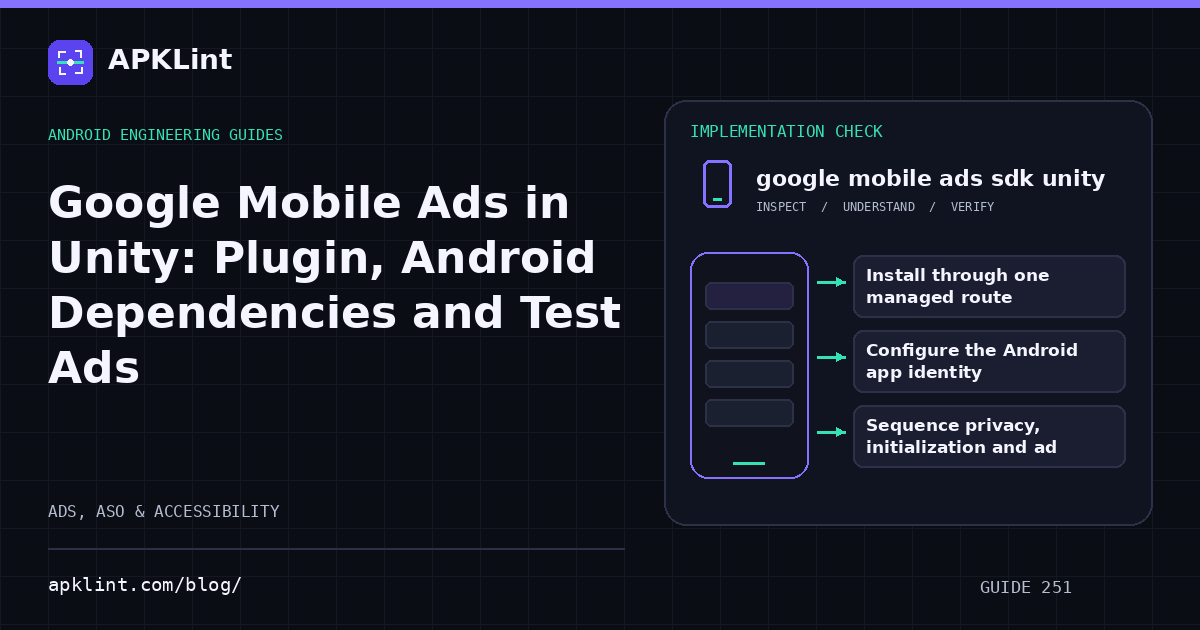
Install through one managed route
Use a supported package installation method and record the plugin version. When migrating between a .unitypackage import and a package-manager route, follow Google's cleanup instructions so old assets and native libraries do not remain alongside the new package.
Duplicate plugin files can produce Gradle conflicts or runtime behavior that differs from the version shown in Unity's package list.
Configure the Android app identity
The current plugin guide places the app-ID settings at Assets → Google Mobile Ads → Settings. Supply the Android AdMob app ID, not an ad-unit ID or Firebase app ID.
Inspect the generated Android manifest and resolved dependencies after export. Also distinguish the plugin's minimum SDK requirements from Google's current Play submission target: a plugin guide's compatibility baseline does not override the later store deadline.
Sequence privacy, initialization and ad requests
Apply required consent and audience controls before initializing components that may preload ads. Call the plugin's initialization once through a controlled owner and follow its callback guidance.
Do not assume every callback is safe for immediate Unity object access. Marshal interactions with UnityEngine objects onto the appropriate main-thread path described by the plugin version.
Test the built game
| Scenario | Check |
|---|---|
| First launch | Consent and initialization do not race |
| Scene transition | Old ad objects and callbacks are cleaned up |
| Rewarded completion | Reward granted once for the documented callback |
| Background/return | No duplicate ad load or blocked game input |
| Release optimization | Required native/plugin code remains available |
Use Android demo ad units or configured test devices. Editor simulation is not equivalent to a real Android integration test.
APKLint's SDK detector can help inspect the exported artifact, but it cannot validate your AdMob account or execute Unity scenes. Use the current Unity plugin setup and test-ad guidance, preserving the plugin and native dependency versions with the game release.
Sources and further reading
- Google: Google Mobile Ads Unity plugin
- Google: Enable test ads on Android
- Google Play: Target API level requirements
Reference review: 22 September 2026. Examples illustrate the workflow; check your installed versions, release artifact and account-specific Console requirements before applying them. This guide is not a claim that APKLint executed your project or verified your private account.

Android inspection tools and practical release guides. About APKLint · Report a correction