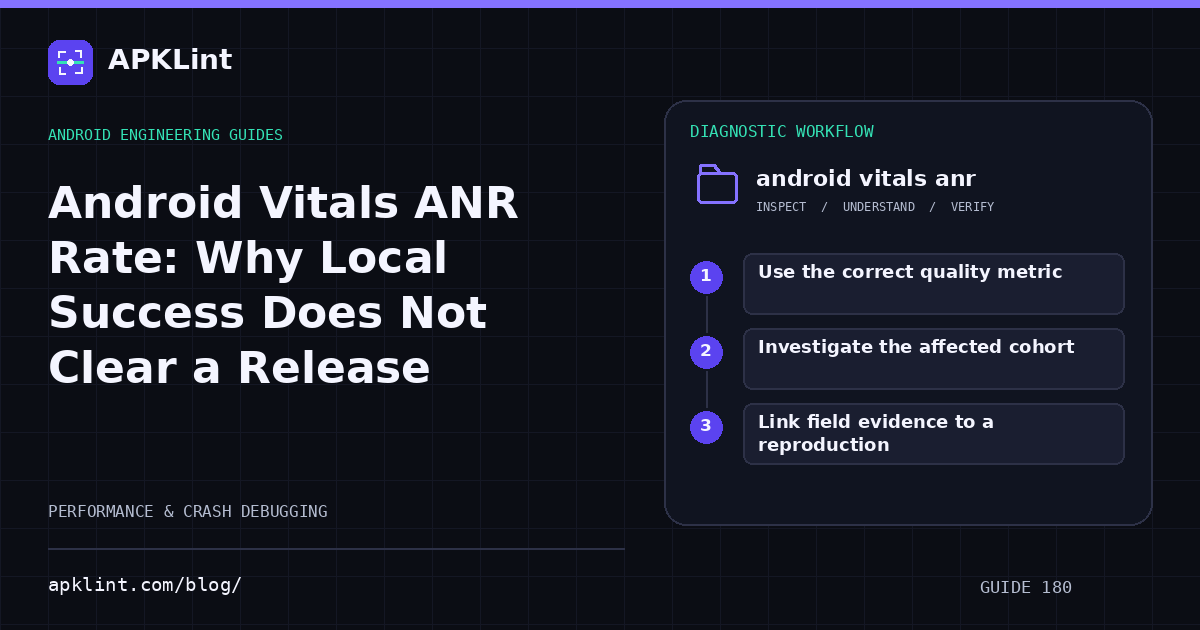
Use the correct quality metric
The Android vitals guide defines user-perceived ANR rate and its eligible population. On 22 September 2026, the published overall threshold is 0.47%, with separate device-specific thresholds.
These values are dated policy/quality references, not a guarantee that every app below the threshold provides a good experience.
Investigate the affected cohort
Filter by version, device and Android release where data is available. Compare the ANR reason and thread traces rather than assuming every cluster is caused by the same main-thread operation.
The ANR diagnostic guide explains blocked work, locks and component-specific behavior.
Link field evidence to a reproduction
| Field clue | Reproduction to try |
|---|---|
| Low-memory devices | Large input and memory pressure |
| Startup cluster | Cold launch with slow initialization |
| Network-dependent action | Slow or failing network |
| Background component | Relevant scheduling and lifecycle constraints |
| Lock wait | Concurrent operations and owner-thread trace |
A main-thread stack captured after the blockage may not show the original cause. Correlate with other threads and available timing evidence.
Fix the dependency, not only the thread label
Moving an operation to a worker still blocks the UI if the main thread waits synchronously for it. Review ownership, cancellation and completion delivery as a whole.
Monitor the corrected release
Validate the affected scenario locally, then track the new version's field behavior. Aggregate windows can retain old-version failures while users update.
APKLint's Crash / ANR Analyzer can help interpret a redacted report and its Vitals Checker can structure the review. Neither establishes that an ANR is resolved in production. Keep the reproduction, fix and post-release cohort evidence together.
Sources and further reading
Reference review: 22 September 2026. Examples illustrate the workflow; check your installed versions, release artifact and account-specific Console requirements before applying them. This guide is not a claim that APKLint executed your project or verified your private account.

Android inspection tools and practical release guides. About APKLint · Report a correction